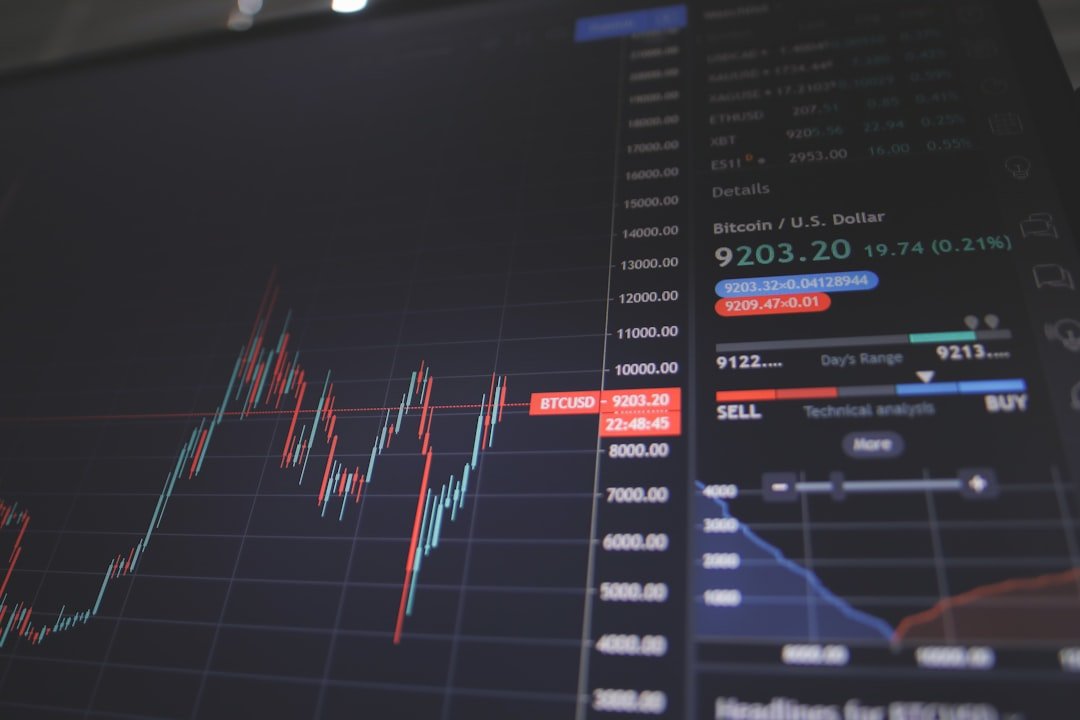
- What Is Driving the AI Investment Boom 2026
- Why the $1 Trillion Figure Matters
- Is the AI Investment Boom 2026 a Bubble?
- Which Sectors Are Benefiting Most
- Smart Strategies for Investors Right Now
- How the Boom Is Playing Out Across US, UK, Canada, Australia and Europe
- Long-Term Outlook Beyond 2026
- Common Mistakes Investors Make During an AI Boom
- Frequently Asked Questions
The AI investment boom 2026 has become the single biggest force reshaping global stock markets this year, with fresh forecasts suggesting the world is only in the early innings of a multi-trillion-dollar buildout. From cloud infrastructure to chipmakers to enterprise software, capital is pouring into artificial intelligence at a pace few analysts predicted even eighteen months ago.
For everyday investors watching their portfolios, the question is no longer whether AI matters to the market â it clearly does â but whether this is a durable multi-year growth story or a bubble waiting to deflate. This article breaks down what’s actually happening, backed by the latest data, and what it could mean for your investing decisions in the months ahead.
Understanding the scale of the AI investment boom 2026 also matters because it affects far more than tech-focused portfolios. Pension funds, retirement accounts, and broad index funds across the US, UK, Canada, Australia, and Europe now carry meaningful exposure to this trend whether individual investors realize it or not, which is exactly why staying informed on both the opportunity and the risk is worthwhile right now.
What Is Driving the AI Investment Boom 2026
Several forces are converging at once. Hyperscale cloud providers are racing to build out data center capacity to meet surging demand for AI compute. Chipmakers are reporting record order backlogs. And enterprises across nearly every industry are budgeting for AI tools in ways that simply didn’t exist a few years ago.
According to Goldman Sachs research, global AI investment is forecast to exceed $1 trillion in 2026 alone, with the bank projecting AI-related spending could account for as much as 1.4% of global GDP by 2028. That is a staggering share of the world economy tied to a single technology category.
Corporate Capital Expenditure Is Accelerating
Major technology companies have signaled they intend to keep expanding capital expenditure on AI infrastructure well into 2027, even as some investors question the pace of spending relative to near-term returns.
Why the $1 Trillion Figure Matters
A trillion-dollar spending figure is not just a headline number â it represents a structural shift in how capital moves through the global economy. Money that might once have flowed into traditional manufacturing, energy infrastructure, or even other tech categories is now concentrated heavily in AI-adjacent assets.
This concentration has real consequences for diversified portfolios, index funds, and retirement accounts, since AI-linked companies now represent an outsized share of major stock indices in the US, UK, and other developed markets.
Is the AI Investment Boom 2026 a Bubble?
This is the debate dominating financial media right now. Some analysts point to stretched valuations, comparing current AI stock multiples to the dot-com era. Others argue the comparison is flawed, since today’s leading AI companies are already generating substantial revenue and profit, unlike many speculative internet startups of the late 1990s.
Wall Street’s seasonal patterns add another layer of caution: September has historically been one of the weakest months for equities, and some strategists worry that any pullback in AI-heavy stocks this month could trigger a broader market correction given how concentrated gains have become.
Signs Worth Watching
Financial commentators generally point to a few warning signs that would suggest bubble territory: capital expenditure outpacing actual revenue growth, insider selling accelerating, and credit markets tightening for AI infrastructure projects. None of these has definitively materialized yet, but they remain worth tracking closely.

Which Sectors Are Benefiting Most
The AI investment boom is not limited to chipmakers. Several adjacent sectors are seeing meaningful tailwinds:
Semiconductor manufacturers and equipment suppliers remain at the center of the buildout, since every layer of AI infrastructure depends on advanced chips. Cloud infrastructure providers are expanding data center footprints at a record pace to meet enterprise demand. Energy and utility companies are also benefiting indirectly, as AI data centers require enormous and growing amounts of electricity. Even traditional software companies are re-rating higher as they integrate AI features into existing products.
Smart Strategies for Investors Right Now
Given the uncertainty around valuations, many financial advisors recommend a measured approach rather than chasing the hottest AI names blindly. Diversifying across the AI value chain â chips, infrastructure, software, and energy â can reduce single-stock risk while still capturing the broader trend.
Dollar-cost averaging into diversified funds with AI exposure, rather than making large lump-sum bets on individual names, is a strategy several analysts continue to recommend heading into the final quarter of 2026.
As always, remember that markets can remain volatile in the short term even when the long-term trend is intact, and past performance is never a guarantee of future returns.
How the Boom Is Playing Out Across US, UK, Canada, Australia and Europe
The AI investment boom 2026 is not confined to Silicon Valley. In the United States, hyperscalers are announcing new data center campuses at a pace that is straining local power grids in several states, while pension funds and 401(k) plans are gaining indirect AI exposure through broad index holdings.
In the United Kingdom, government-backed initiatives are aiming to position the country as a hub for AI research and compute capacity, drawing fresh venture and infrastructure capital into London and beyond. Canadian pension funds, long known for large infrastructure allocations, have also been increasing exposure to data center and semiconductor-adjacent assets.
Australia’s superannuation funds are following a similar path, adding AI-linked technology exposure to diversify away from the country’s traditionally resource-heavy market. Across the European Union, regulators are simultaneously trying to balance rapid AI adoption with new compliance frameworks, which could shape how quickly capital flows into the region compared to the US and Asia.
Long-Term Outlook Beyond 2026
Even skeptics of near-term AI valuations tend to agree that artificial intelligence will remain a defining economic force well beyond this year. Morgan Stanley’s research suggests AI-driven productivity gains could reshape entire industries over the next decade, from healthcare diagnostics to financial services automation.
Whether the current AI investment boom eventually cools off or keeps accelerating, most strategists agree the underlying technology shift is structural rather than a passing fad. The bigger question for investors is one of timing and valuation discipline, not whether AI matters at all.
For readers who want to go deeper on how AI is reshaping specific investment categories, our AI & Investing category covers this evolving space in more detail, alongside our broader Stock Market coverage.
Common Mistakes Investors Make During an AI Boom
One of the most frequent mistakes during any boom cycle, including the current AI investment boom, is chasing recent winners after most of the gains have already happened. Buying purely on momentum, without regard to valuation, tends to leave investors most exposed when sentiment shifts.
Another common error is over-concentration. Because AI-linked companies now make up a large share of major indices, investors who believe they are diversified may actually carry far more AI-specific risk than they realize. Reviewing actual sector exposure, not just fund names, is a useful habit during periods like this.
Finally, ignoring cash flow and profitability fundamentals in favor of growth narratives alone has historically preceded painful corrections in past technology cycles, and many analysts argue the same discipline applies today.
Frequently Asked Questions
Is now a good time to invest in AI stocks?
There is no universal answer â it depends on individual risk tolerance, time horizon, and existing portfolio exposure. Given elevated valuations, many advisors suggest diversified exposure over concentrated bets on single companies.
How big is the AI investment boom expected to get?
Goldman Sachs projects global AI investment will exceed $1 trillion in 2026 and could represent roughly 1.4% of global GDP by 2028, according to the bank’s published research. That scale makes the current AI investment boom one of the largest capital allocation shifts in modern market history.
What could end the AI investment boom?
Analysts point to a mismatch between capital expenditure and actual revenue growth, tightening credit conditions for infrastructure projects, or a broader macroeconomic shock as the most likely triggers for a slowdown.
Should beginner investors participate in the AI investment boom?
Beginners are generally better served by broad, diversified exposure through index funds rather than picking individual AI stocks, since concentrated bets carry significantly higher risk during periods of elevated valuation like the current one.
Final Thoughts
The scale of capital moving into artificial intelligence this year is genuinely historic, and it is reshaping everything from index composition to national energy policy. Whether this proves to be the start of a decade-long productivity revolution or eventually cools into a more modest growth story, staying informed and diversified remains the most sensible approach for investors watching from the sidelines or already positioned in the space.
This article is for informational purposes only and does not constitute financial or investment advice. Always do your own research or consult a licensed financial advisor before making investment decisions.