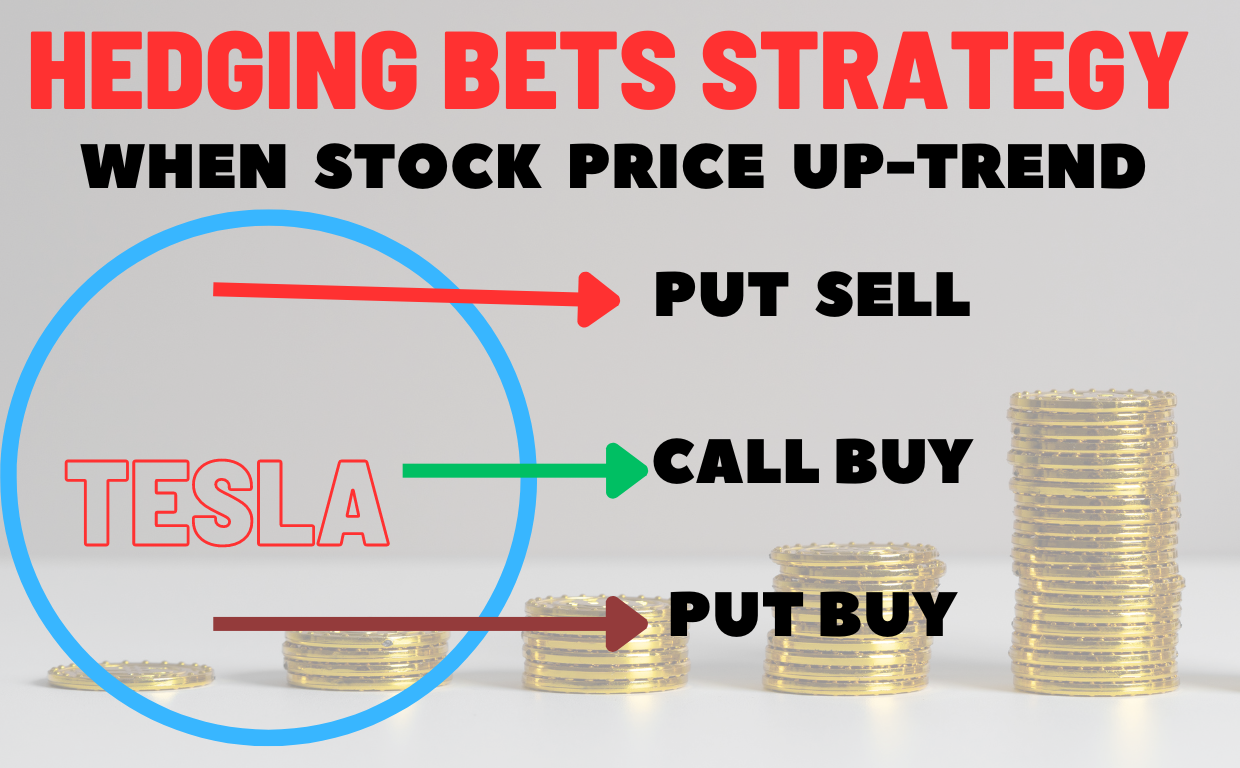
Hedging means opening a second position that gains value when your main investment loses value. It works like insurance: you pay a cost up front (or give up some upside) in exchange for limiting how much you can lose. This guide explains how hedging works, the main tools investors use, and two worked examples using Indian market instruments.
What Is Hedging?
A hedge is a trade designed to offset the risk of another position. If you own shares and worry about a fall, you can take a position that profits when those shares (or the market) drop. If the fall happens, the hedge’s gain cushions the loss. If it doesn’t, you lose the cost of the hedge, much like an unused insurance premium.
Hedging does not increase returns. Its job is to reduce the range of outcomes. Most long-term individual investors don’t hedge at all and rely on diversification and time instead. Hedging is more common for traders, businesses with currency or commodity exposure, and investors with a large, concentrated position they don’t want to sell (for example, to avoid a tax event).
The Main Hedging Instruments
Forward contracts
A forward is a private agreement between two parties to buy or sell an asset at a fixed price on a future date. Forwards are customised and traded over the counter, so they are widely used by companies to lock in currency or commodity prices. The trade-off is counterparty risk: you rely on the other side to honour the deal.
Futures contracts
Futures work like forwards but are standardised and traded on an exchange (in India, on NSE and BSE for equity indices and stocks, and on MCX for commodities). The exchange’s clearing house guarantees settlement, and positions are marked to market daily, so you must keep enough margin in your account.
Options
An option gives the buyer the right, but not the obligation, to buy (call) or sell (put) an asset at a set strike price before expiry. Buying a put is the classic hedge for a stock holding: your downside is capped below the strike, while you keep the upside. The cost is the premium you pay. Read our guide to option spreads for ways to reduce that cost.
Money market hedges (for currency risk)
A money market hedge is used by businesses that will pay or receive foreign currency in the future. They borrow in one currency and deposit in another today, using short-term money market instruments (which mature in under one year), so the exchange rate is effectively locked in. It’s a corporate treasury tool rather than something most retail investors use.
Long Hedge vs Short Hedge
- Short hedge: you own an asset (or will sell it later) and sell futures to protect against its price falling. Example: a farmer selling wheat futures before harvest, or an investor selling Nifty futures against a stock portfolio.
- Long hedge: you plan to buy an asset later and buy futures now to protect against its price rising. Example: a jewellery maker buying gold futures to lock in the cost of next quarter’s gold.
Example 1: Protecting a Single Stock with a Put
Suppose you bought 100 shares of a company at ₹1,000. The stock has slipped to ₹900. You still believe in it long term but want to limit further losses for the next month.
- You buy put options with a strike price of ₹850, paying a premium of ₹20 per share (₹2,000 for 100 shares).
- If the stock falls to ₹700: your shares lose ₹200 each from ₹900, but the put is worth at least ₹150 (₹850 − ₹700). Your net loss from today is capped at ₹50 + ₹20 premium = ₹70 per share, or ₹7,000 in total, however far the stock falls before expiry.
- If the stock rises to ₹1,050: the put expires worthless. You keep the ₹150 gain per share, minus the ₹20 premium.
In practice, Indian stock options trade in fixed lot sizes, so your share count may not match a lot exactly. The example is simplified to show the mechanics.
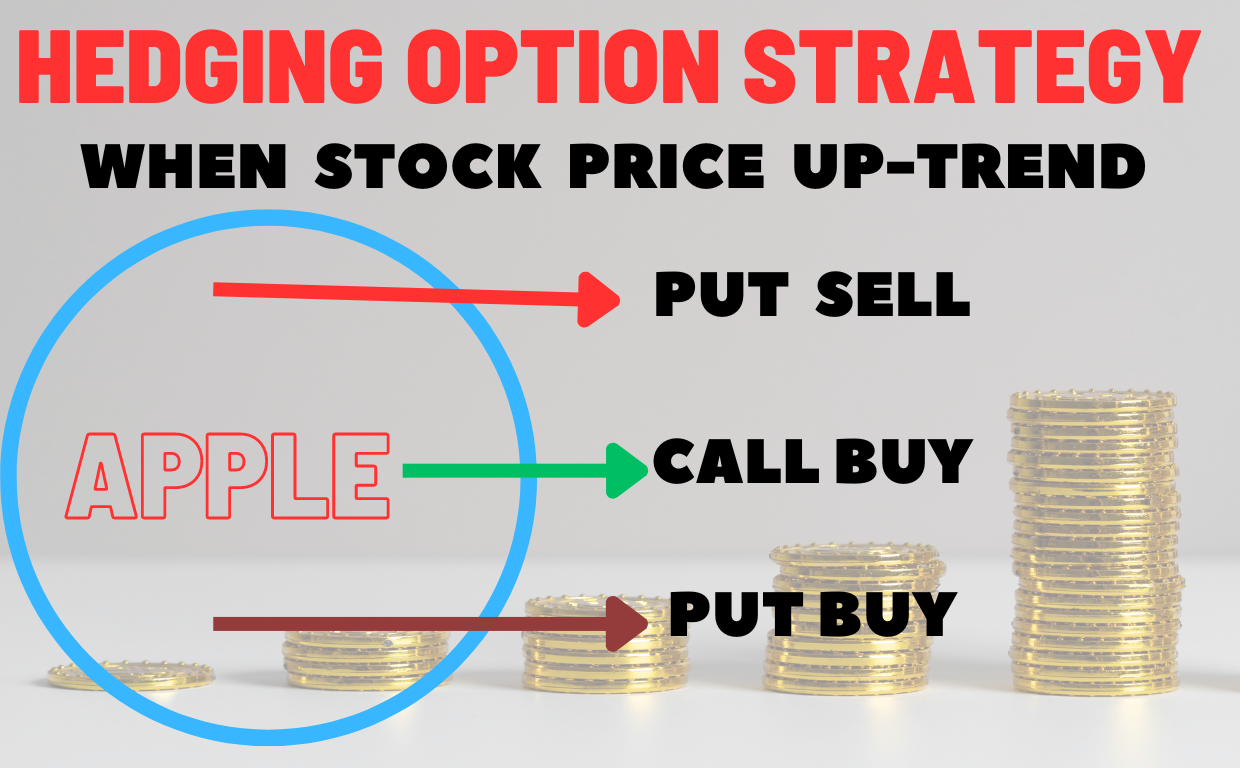
Example 2: Hedging a Portfolio with Nifty Puts
If you hold a diversified portfolio of large Indian stocks, you can hedge it with Nifty 50 index options instead of buying puts on every stock. The number of lots you need depends on your portfolio’s value, its beta (how much it moves relative to the Nifty), and the value of one contract:
Lots needed = (Portfolio value × Beta) ÷ (Lot size × Nifty level)
For illustration, take a ₹20 lakh portfolio with a beta of 1.0, the Nifty at 25,000 and a lot size of 75. One lot covers 75 × 25,000 = ₹18.75 lakh, so one lot of Nifty puts hedges roughly the whole portfolio. A portfolio with a beta of 1.3 would need about 1.4 lots, so you’d choose between slightly under- or over-hedging. SEBI and NSE revise lot sizes periodically, so check the current Nifty lot size before calculating.
Popular Option Hedging Strategies
| Strategy | How it works | Trade-off |
|---|---|---|
| Protective put | Own the stock or index, buy a put | Full downside protection below the strike; costs a premium |
| Collar | Own the asset, buy a put and sell a call | Call premium pays for the put; upside is capped at the call strike |
| Covered call | Own the asset, sell a call | Earns a premium that cushions small falls only; not real crash protection |
| Put spread | Buy a put and sell a lower-strike put | Cheaper than a plain put; protection only between the two strikes |
Strategies such as straddles, strangles, iron condors and butterflies are often listed alongside these, but they are bets on volatility rather than hedges for an existing holding.
The Costs and Limits of Hedging
- It costs money. Option premiums, brokerage and taxes eat into returns, especially if you hedge continuously.
- It caps or reduces upside. Collars and futures hedges give away some gains in exchange for protection.
- Hedges are rarely perfect. An index hedge won’t exactly match a portfolio of individual stocks (basis risk).
- Derivatives need margin and attention. Futures are marked to market daily, and options expire. SEBI studies have repeatedly found that most individual F&O traders lose money, so use derivatives only for protection you understand.
Frequently Asked Questions
Do long-term investors need to hedge?
Usually not. For most people investing for years, diversification, a sensible asset allocation and an emergency fund do the job more cheaply. Hedging makes more sense for short-term needs or a large concentrated position. New to investing? Start with our guide on how to start investing in the share market.
What does “hedging your bets” mean?
It’s an everyday phrase for reducing risk by backing more than one outcome. It comes from the same idea as financial hedging: accept a smaller, more certain result in exchange for avoiding a big loss.
Is diversification a form of hedging?
Loosely, yes. Owning assets that don’t move together (stocks, bonds, gold) reduces overall risk. Strictly, a hedge is a specific offsetting position tied to a specific risk.
Watch a short explainer: Option Hedging Strategy.
This article is for educational purposes only and is not investment advice. Derivatives carry a high risk of loss. Figures in the examples are illustrative; check current lot sizes, margins and taxes with your broker before trading.